How to Get Started in Motorsport in the UK
Ever dreamed of becoming a racing driver but don't know where to start?
Getting into motorsport can seem complicated from the outside.
There are licences to understand, different disciplines to choose from, safety equipment to buy and, of course, the question everyone asks: how much does it actually cost to get started?
The good news is that getting involved in motorsport in the UK is more accessible than you might think. Whether you're interested in circuit racing, karting, rallying, track days or grassroots motorsport, there are routes into the sport for a wide range of ages, experience levels and budgets.
In this guide, we'll explain how to get started in motorsport in the UK, what equipment you'll need, how Motorsport UK licences work and the steps you can take to get behind the wheel.
1. Decide Which Type of Motorsport You Want to Try
The first step is deciding what type of motorsport interests you.
Motorsport isn't just circuit racing. There are numerous disciplines available in the UK, including:
- Circuit racing
- Karting
- Rallying
- Rallycross
- Autocross
- Sprinting
- Hill climbs
- Autotests and AutoSOLOs
- Trials
- Cross-country events
- Time trials
- Navigation and road rallies
Motorsport UK groups its disciplines broadly into Race, Rally, Speed, Grassroots and Off-Road, meaning there are plenty of ways to get involved beyond traditional wheel-to-wheel racing.
If you're completely new to motorsport, don't worry about choosing your long-term career straight away. Try different experiences, visit local events and speak to competitors about how they got started.
New to Karting? Want to start racing cars?
Circuit racing is the route most people picture when they think about becoming a racing driver. It involves qualifying and competing wheel-to-wheel around a race circuit.
You don't necessarily need to own a race car either. Arrive-and-drive opportunities allow you to hire a car and compete without having to purchase, transport and maintain your own race car.
For many beginners, this can be an excellent way to experience competitive racing before committing to a car of their own.
2. You Don't Need to Start With a Race Car
One of the biggest misconceptions about getting into motorsport is that you need a fully prepared race car sitting in your garage.
You don't.
Depending on the discipline, there are events where you can compete using a road car or relatively standard vehicle. Motorsport UK's grassroots routes include events such as autotests, trials and other competitions that can provide an accessible introduction to competitive driving.
If circuit racing is your goal, arrive-and-drive packages can also remove the need to buy your own competition car initially.
This means you can spend some time learning about the sport, deciding which championship or discipline suits you and gaining experience before making a major investment.
3. Understand Motorsport UK Licences
If you want to compete in many types of organised motorsport in the UK, you'll need the appropriate Motorsport UK competition licence.
The licence you need depends on the discipline and level of competition you're entering.
For example, an RS Clubman licence provides access to a range of grassroots disciplines including autotests, trials, autocross, road and navigation rallies and other permitted events.
For circuit racing, you'll need a Race Club licence. Motorsport UK's current guidance states that first-time race competitors purchase a First Race Licence Pack, which includes the first year's licence.
What is a Motorsport UK First Licence Pack?
For first-time competitors, Motorsport UK offers starter packs for race, rally and karting.
For circuit racing, the process includes:
- Purchase your First Race Licence Pack.
- Choose an accredited driver training school.
- Complete your novice driver training course, commonly known as the ARDS test.
- Complete any required medical or vision checks.
- Apply for your first competition licence.
The current Motorsport UK guidance lists the First Race Licence Pack at £115, including the first year's licence, while its current racing-driver page lists the pack at £119, so it's worth checking the latest price before purchasing.
Requirements and costs can change, so always check the latest Motorsport UK regulations before entering an event.
4. Get the Right Motorsport Safety Equipment
Once you've decided what type of motorsport you want to compete in, you'll need to make sure you have the correct safety equipment.
For circuit racing, Motorsport UK currently lists the following personal safety equipment:
- Motorsport helmet
- Fireproof racing suit
- Frontal Head Restraint (FHR)
- Fireproof balaclava
- Fireproof racing gloves
- Motorsport racing boots
- Fireproof underwear
Some items are mandatory depending on the discipline and regulations, while others are strongly recommended. Always check the regulations for your specific championship or event before buying equipment.
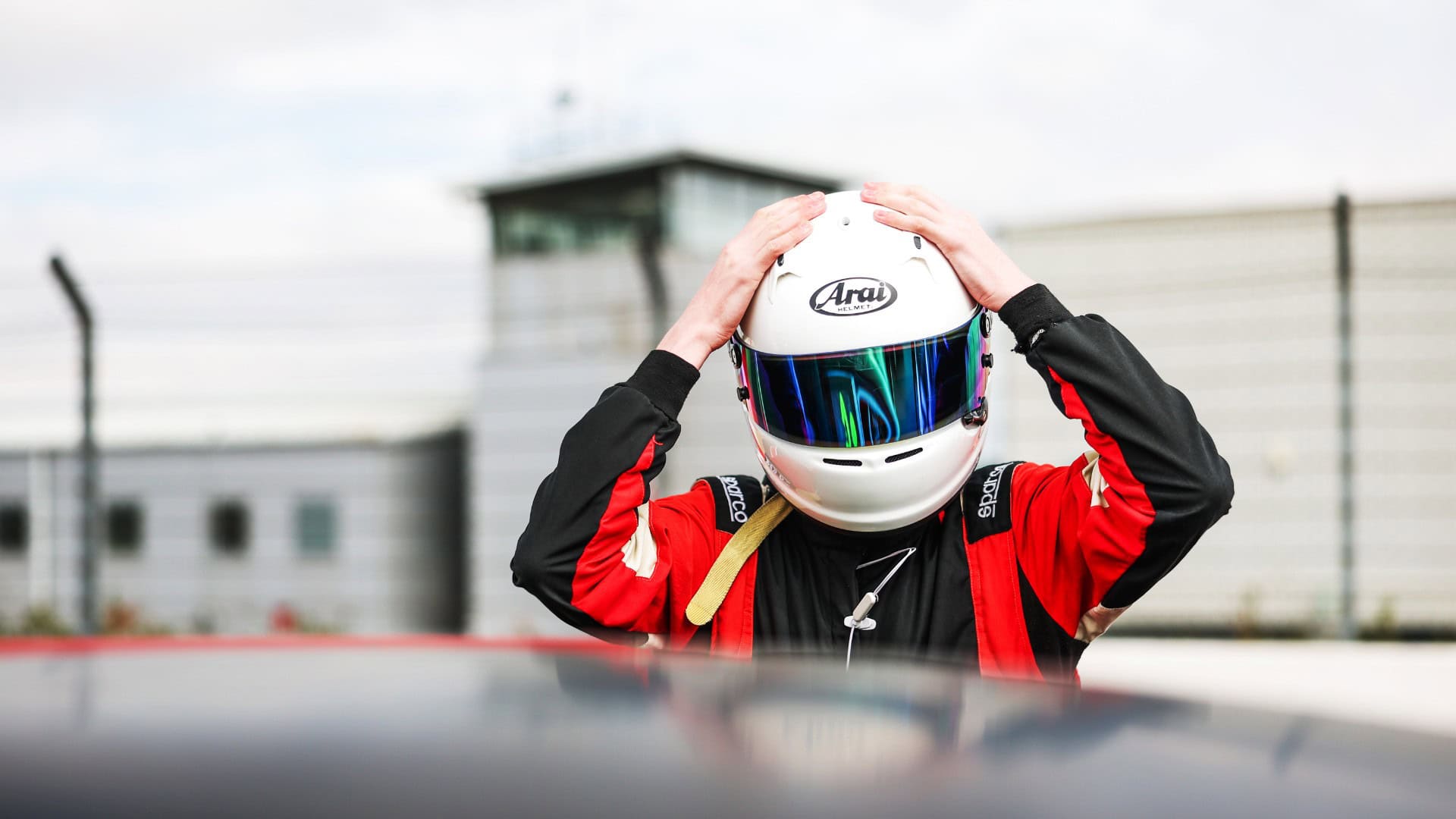
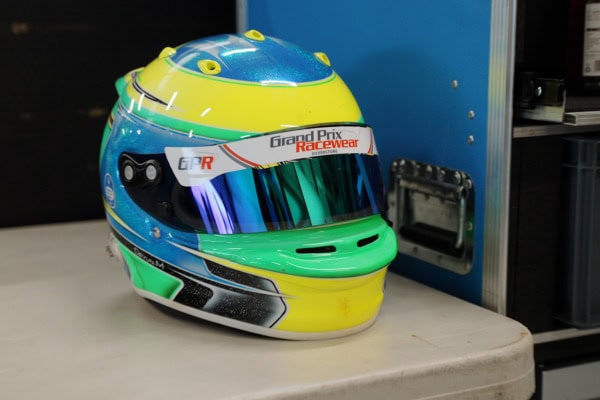
Motorsport helmet
Your helmet is one of the most important pieces of safety equipment you'll buy.
Don't simply choose a helmet based on appearance or price. You need to make sure it has the correct homologation for the type of motorsport you're entering.
It's also essential that your helmet fits correctly. A helmet that is too loose, too tight or incorrectly shaped for your head can be uncomfortable and compromise its effectiveness.
At Grand Prix Racewear, we stock a wide range of motorsport helmets from leading brands, helping drivers find the right option for their discipline and budget.
Racing suit
A proper fireproof racing suit is another key part of your motorsport equipment.
Look for a suit with the appropriate FIA homologation for your competition and make sure you choose the correct size and fit.
Your suit should allow you to move comfortably while seated in your competition car without being excessively loose or restrictive.
Racing gloves and boots
Motorsport gloves are designed to provide grip and control while offering the required level of protection.
Racing boots are similarly designed specifically for driving, with features such as thin soles and increased pedal feel compared with conventional footwear.
For circuit racing, Motorsport UK strongly recommends boots that meet the relevant regulations.
FHR systems
A Frontal Head Restraint, commonly referred to as an FHR system, is another important part of your safety equipment.
FHR systems are designed to help reduce the movement of the head and neck during certain types of impact.
Make sure your FHR system is compatible with your helmet, harness and race seat, and that it meets the requirements of your championship.
5. Choose the Right Size and Don't Buy Everything at Once
Motorsport equipment can quickly become expensive, particularly when you're buying everything for the first time.
The best approach is to work out exactly what your chosen discipline requires before you start shopping.
Your first equipment list might include:
Essential safety equipment
- Helmet
- Race suit
- Gloves
- FHR system
- Balaclava
- Racing boots
Additional equipment
- Fireproof underwear
- Racewear bag
- Helmet bag
- Drink system
- Earplugs
- Communication equipment
- Spare gloves or balaclava
Buying quality equipment from established motorsport brands can also be a better long-term investment than continually replacing cheaper products.
Brands including OMP, Sparco, Alpinestars, Arai, Bell, Stilo and Sabelt are widely used throughout motorsport.
6. Find a Motorsport Club
Joining a motorsport club is one of the best ways to learn about the sport.
Local clubs are often the people who organise events and can be an invaluable source of advice when you're trying to understand licences, regulations, cars and equipment.
Motorsport UK states that there are hundreds of motor clubs across the UK, with thousands of events taking place each year.
Don't be afraid to ask questions.
Most people in motorsport started somewhere, and experienced competitors are often happy to explain how their own journey began.
7. Visit a Motorsport Event Before Competing
If you're not sure whether motorsport is for you, go and watch an event.
Visit your local circuit, attend a club meeting or head to a karting track.
Watching motorsport in person gives you a much better understanding of what's involved than simply watching races online.
Pay attention to:
- The different types of cars competing
- How teams operate
- The equipment drivers use
- How much preparation is involved
- The atmosphere in the paddock
- How competitors interact with each other
It's also a great opportunity to speak to drivers and teams about how they got started.
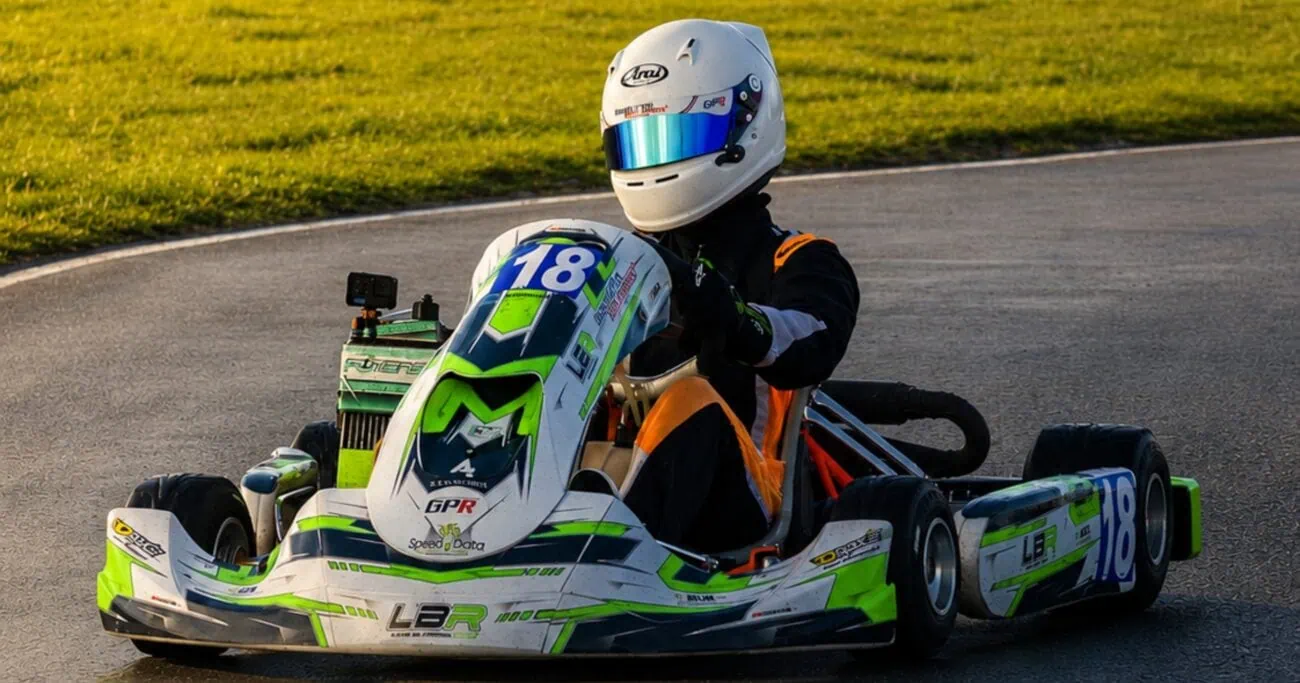
8. Consider Karting
If you're younger or simply want to develop your driving skills before moving into cars, karting is an excellent place to start.
Karting teaches many of the fundamentals required in motorsport, including:
- Racecraft
- Braking
- Cornering
- Overtaking
- Race starts
- Driver positioning
- Consistency
- Understanding racing lines
Motorsport UK has a dedicated route into competitive karting, with first-time competitors able to purchase a Karting First Licence Pack and complete the required novice driver training.
Karting can also be a great family activity, with opportunities ranging from casual arrive-and-drive sessions to fully competitive championships.
9. Work Out Your Motorsport Budget
It's important to be realistic about your budget before you start.
The cost of motorsport varies enormously depending on the discipline.
Your costs could include:
- Competition licence
- Racewear
- Helmet
- FHR system
- Competition car
- Car preparation
- Race entry fees
- Tyres
- Fuel
- Servicing
- Transport
- Accommodation
- Team or mechanic support
You don't necessarily need to spend a fortune immediately.
Starting with grassroots events, karting or an arrive-and-drive experience can allow you to get involved without the cost of purchasing and maintaining a dedicated race car.
Motorsport UK's current guidance estimates that getting through the initial race licence process and purchasing the required safety equipment can cost around £1,000–£1,500, before the ongoing costs of competing are taken into account.
10. Start Building Experience
Once you've got your licence and equipment sorted, the most important thing is simply to get seat time.
Your first event isn't about winning.
It's about learning.
You'll need to become comfortable with:
- Circuit procedures
- Flags
- Qualifying
- Race starts
- Overtaking
- Racecraft
- Pit lane procedures
- Working with your team
- Looking after your car
- Understanding your data and lap times
The more experience you gain, the more confident you'll become.
The key is to research your chosen discipline first, then buy equipment specifically to meet its regulations.
Start Your Motorsport Journey With Grand Prix Racewear
Getting started in motorsport can feel overwhelming, but you don't have to figure everything out alone.

At Grand Prix Racewear, we've been helping racers, karters and motorsport enthusiasts get race-ready for more than 30 years.
Based at Silverstone, the home of British motorsport, we stock an extensive range of motorsport helmets, racing suits, gloves, boots, FHR systems and safety equipment from leading motorsport brands.
Whether you're preparing for your first competition, upgrading your existing racewear or simply looking for advice on what you need to get started, our team can help you find the right equipment for your discipline.
Ready to get started?
Start by deciding which type of motorsport interests you, check the relevant Motorsport UK requirements and build your safety equipment around the regulations for your chosen discipline.
Your first race might be closer than you think.
Frequently Asked Questions
Can anyone start motorsport in the UK?
Yes. There are routes into motorsport for a wide range of ages and experience levels. The licence and safety requirements depend on the discipline and level of competition you want to enter.
Do I need a driving licence to go racing?
Not necessarily. Motorsport UK states that you don't need a road driving licence to compete in motorsport, although specific competition and licence requirements still apply.
Do I need my own race car?
No. Arrive-and-drive opportunities allow drivers to hire a competition car and compete without owning their own race car.
What equipment do I need to start racing?
For circuit racing, you'll generally need an approved helmet, fireproof race suit, FHR system, balaclava and gloves, with appropriate racing boots and fireproof underwear also recommended under Motorsport UK's current guidance. Always check the regulations for your specific event or championship.
Is motorsport expensive to get into?
It can be, but the cost varies considerably depending on the discipline. Grassroots events, karting and arrive-and-drive racing can provide more accessible routes into the sport without immediately purchasing your own competition car.
Where can I find motorsport events in the UK?
Motorsport UK provides an event finder and information on different disciplines and clubs across the UK. There are thousands of permitted events taking place across the country each year.
Start your journey. Get equipped. Get racing.
Explore the full range of motorsport racewear and safety equipment at Grand Prix Racewear and get ready for your first time on track.